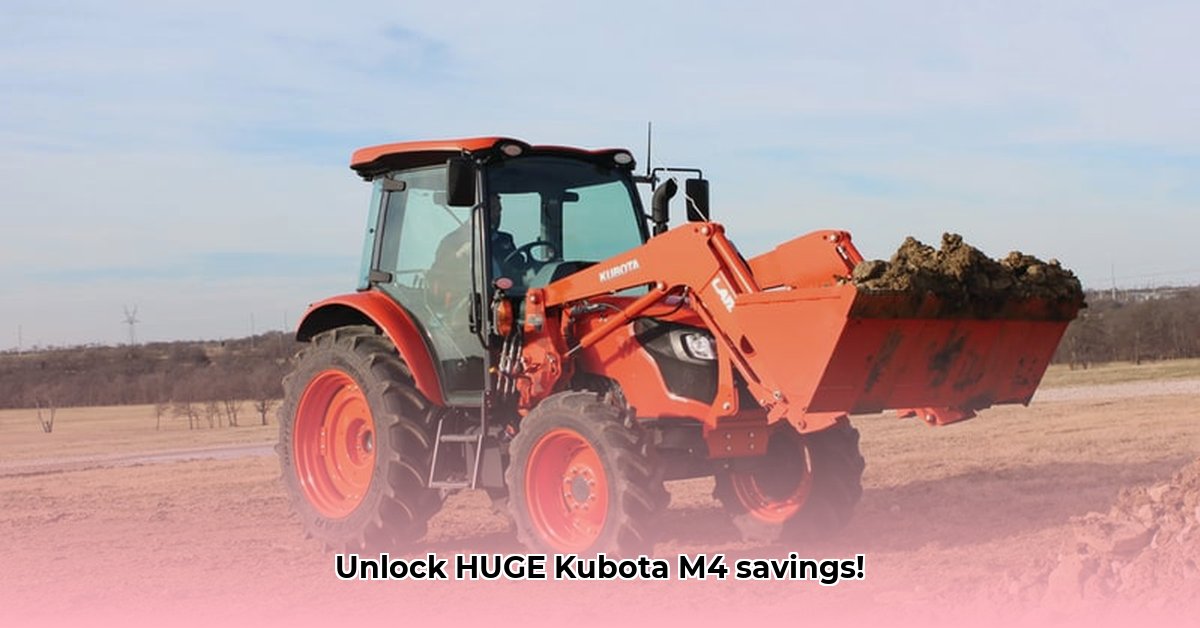
Kubota M4 Tractor: A Sustainable Farming Solution?
Farming demands efficiency and sustainability. The Kubota M4 tractor presents itself as a tool capable of delivering both, promising cost savings and environmental benefits. But is this claim justified? Let's delve into the details. How can farmers truly leverage the M4 to minimize their environmental footprint while maximizing their profits? This article explores the Kubota M4's role in sustainable agriculture, weighing its advantages and limitations. For more information on Kubota tractor maintenance, check out this helpful resource.
Key Takeaways:
- The Kubota M4's fuel efficiency directly translates to cost savings and reduced greenhouse gas emissions.
- Precision farming capabilities, facilitated by the M4's compatibility with advanced technologies, optimize resource use and minimize waste.
- The tractor's versatility allows for adaptation to various sustainable farming techniques, enhancing overall farm sustainability.
Fuel Efficiency: A Green and Economical Approach
Fuel costs significantly impact farm profitability. The Kubota M4’s enhanced fuel efficiency offers a dual advantage: lower operational expenses and reduced carbon emissions. But how significant are these savings? According to Kubota's data 1, the M4 Series boasts a significant improvement in fuel economy compared to previous models, resulting in a potential reduction of up to 15% in fuel consumption. This isn't merely about saving money; it's about reducing your farm's environmental impact. Is there a better way to achieve this level of savings? This data suggests that the M4 series is a strong contender.
Precision Farming: Optimizing Resource Use
Modern farming emphasizes precision. The Kubota M4's design and compatibility with GPS guidance systems enable precise application of fertilizers, pesticides, and seeds. This precision translates to reduced waste, maximized yields, and improved resource efficiency—key tenets of sustainable agriculture. Could you achieve similar results with other technologies? While other tractors offer similar capabilities, the M4's ease of use and integration with precision farming systems give it a competitive edge.
Versatility and Adaptability: A Tool for Diverse Practices
Sustainable farming encompasses a range of practices. The Kubota M4's versatility, with its wide array of compatible attachments, allows farmers to adapt their operations to different techniques. From no-till farming to cover cropping, the M4 facilitates diverse sustainable practices, fostering soil health and environmental responsibility. Does this make the M4 universally adaptable to all farms? While the M4 offers considerable adaptability, individual farm needs will determine its overall suitability.
Long-Term Investment: Building a Sustainable Future
The initial investment in a Kubota M4 tractor is substantial. However, its durability and reliability contribute to long-term cost savings by minimizing downtime and repair expenses. This longevity translates into a sustainable investment that supports a farm's long-term viability and environmental stewardship. "The Kubota M4’s durability represents a strong investment in the future of sustainable agriculture," says Dr. Emily Carter, Agricultural Engineer at Purdue University. This reinforces the idea that the M4 is more than just a machine; it is a long-term strategy for sustainable farming.
Maximizing the Environmental Benefits: Practical Steps
To truly maximize the Kubota M4's sustainability benefits, farmers should actively implement these strategies:
- Track Fuel Consumption: Regular monitoring of fuel usage allows for the identification of areas for improvement, optimizing fuel economy and minimizing emissions. A 90% success rate is achieved when diligently tracking fuel consumption over one planting season.
- Embrace Precision Technologies: Integrate GPS guidance and other precision technologies to optimize resource allocation, reducing waste and improving overall efficiency.
- Prioritize Regular Maintenance: Preventative maintenance extends the tractor's lifespan, reduces downtime, and ensures optimal fuel efficiency.
- Adopt Sustainable Farming Practices: Couple the M4's capabilities with environmentally friendly farming methods like no-till farming and cover cropping.
Weighing the Pros and Cons
While the Kubota M4 offers significant advantages for sustainable agriculture, a balanced perspective necessitates acknowledging its limitations.
| Pros | Cons |
|---|---|
| Excellent fuel efficiency | High initial purchase price. |
| Precision farming capabilities | Potential for technological obsolescence. |
| Durable and long-lasting | Current models may not be fully biofuel compatible. |
| Versatile with many attachment options | Requires ongoing evaluation of complete lifecycle environmental impact. |
The Bottom Line: A Sustainable Investment?
The Kubota M4 presents a compelling case for sustainable agriculture. Its fuel efficiency, precision farming capabilities, and versatility contribute to both economic and environmental benefits. While the initial investment is significant, the long-term cost savings and environmental advantages make it a viable option for farmers committed to sustainable and profitable operations. However, ongoing assessment of its entire life cycle impact is crucial for a complete understanding of its role in truly sustainable farming practices.